Where mentalism fits a wedding day
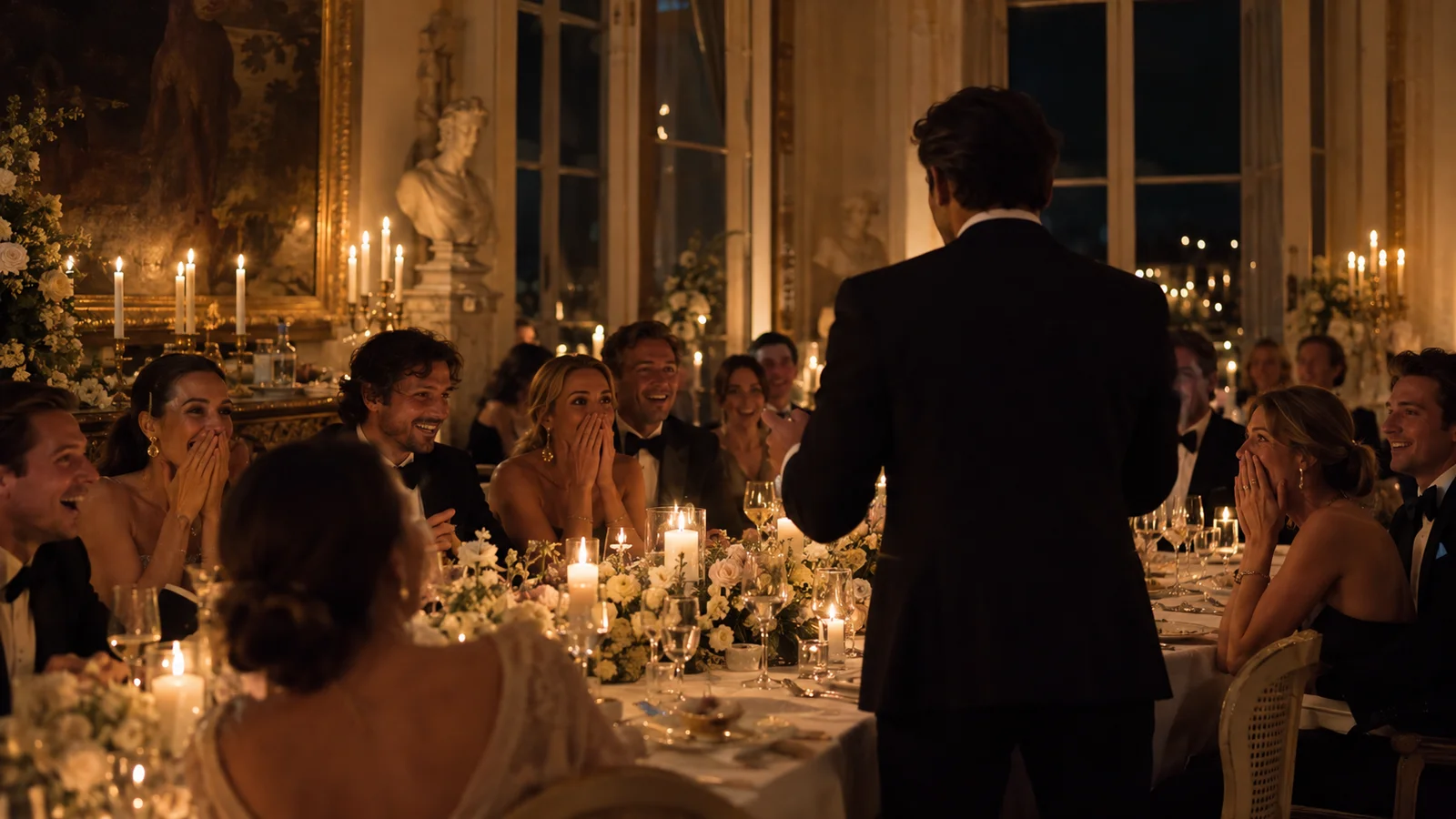
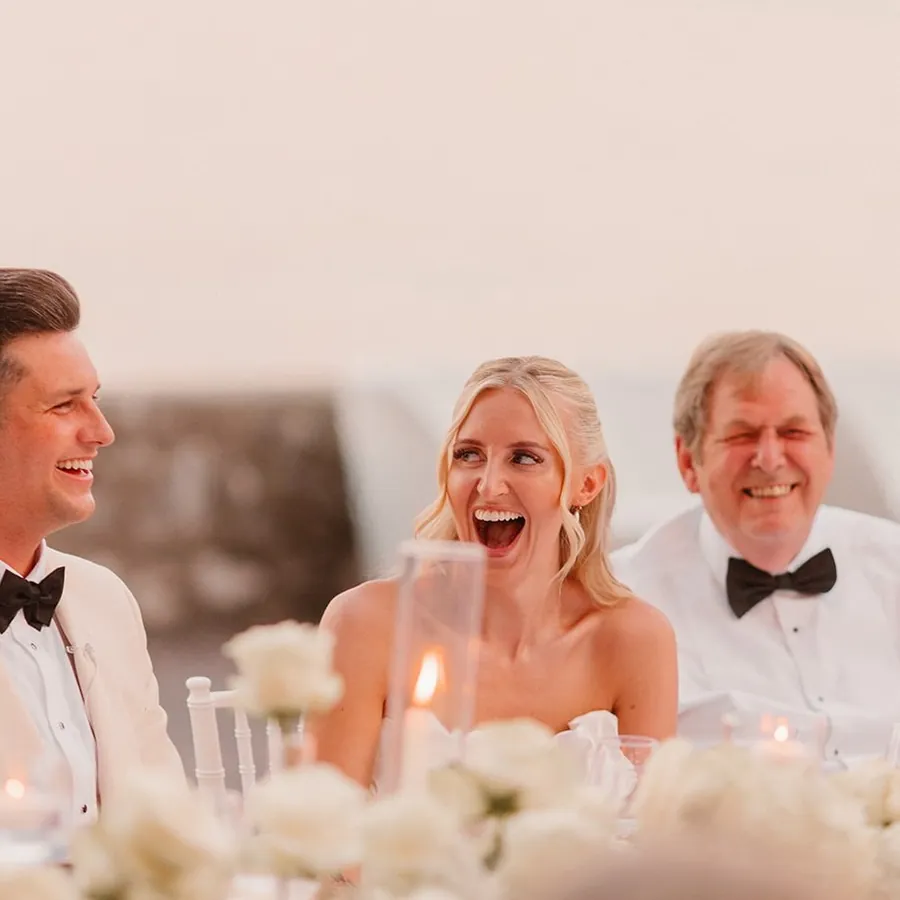
The seated piece, after dinner. Twenty to thirty minutes for the whole room at once, built around the two people the day is about — choices anticipated, thoughts revealed, a room of two families brought to the same moment. Most weddings that book mentalism book this, because it lands in the one window where everyone is finally sitting down together and the schedule has nothing left to demand.
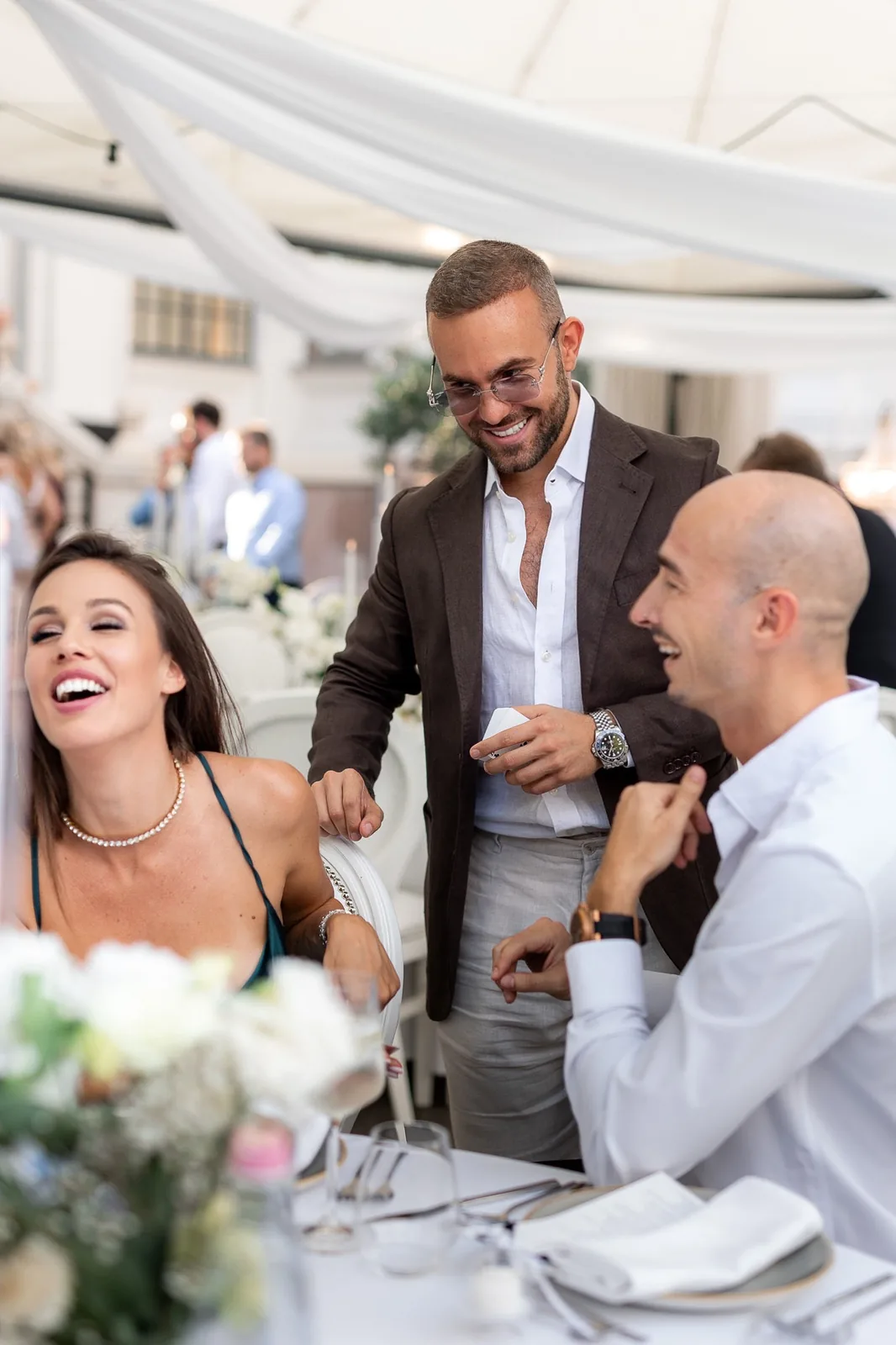
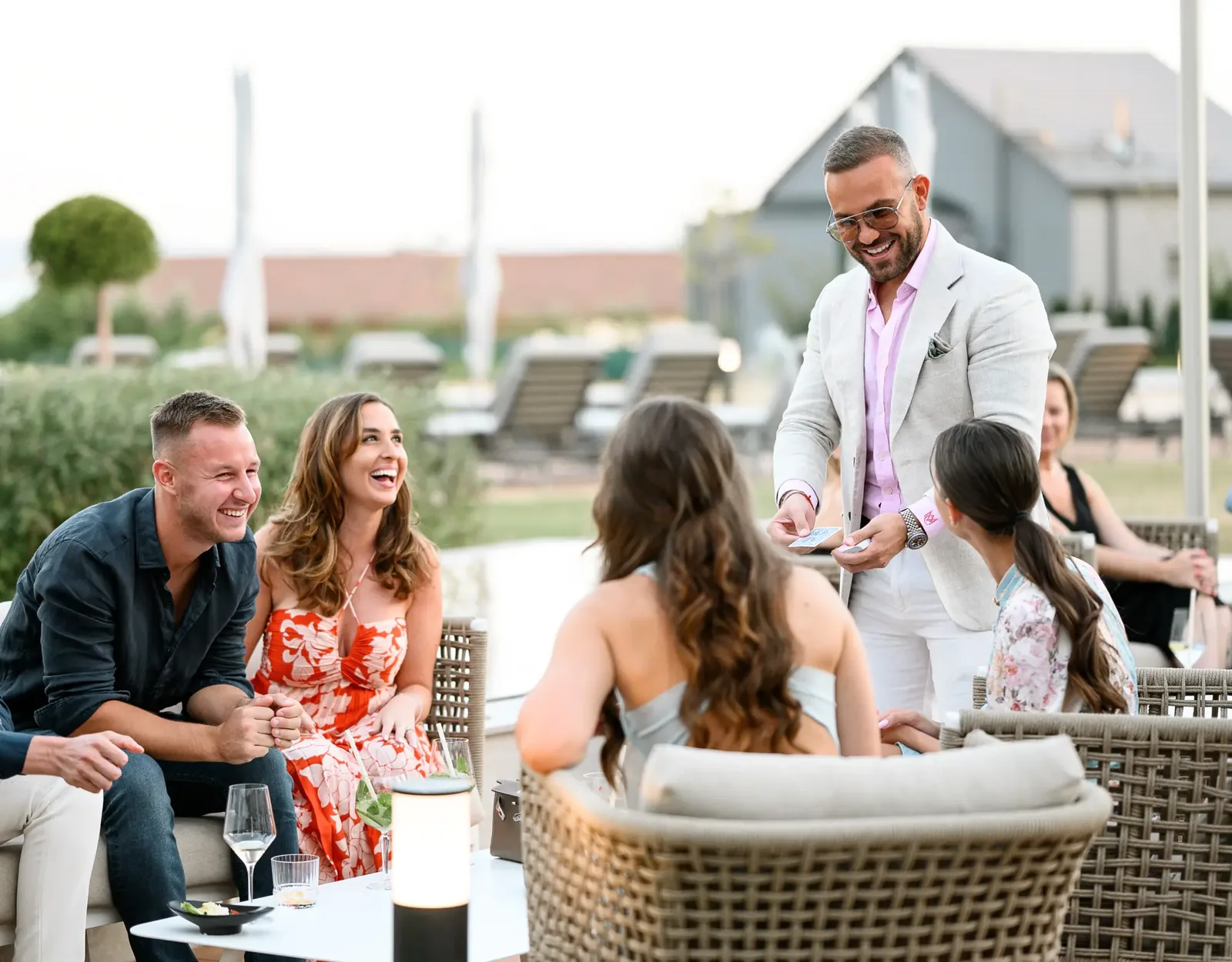
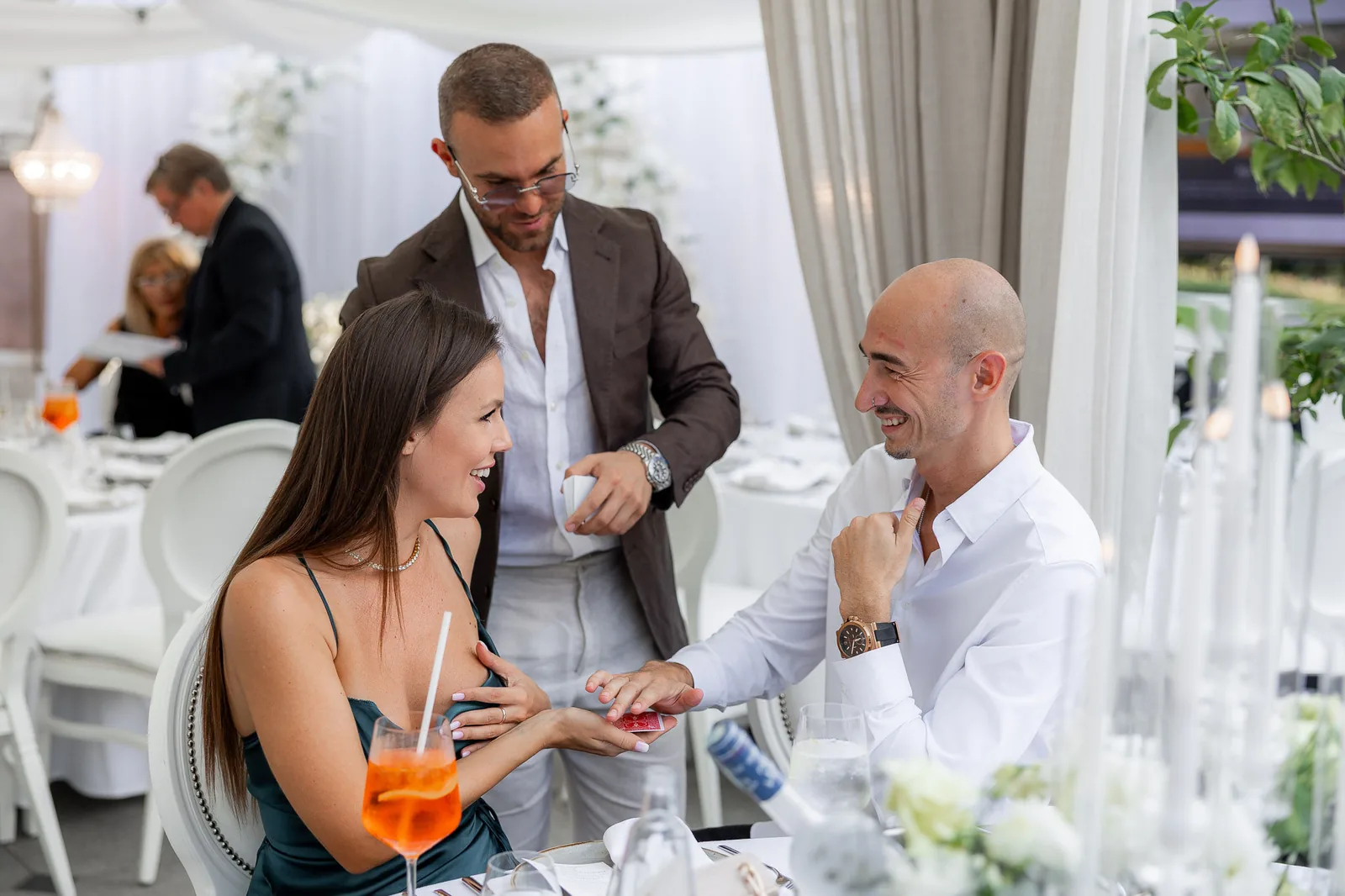
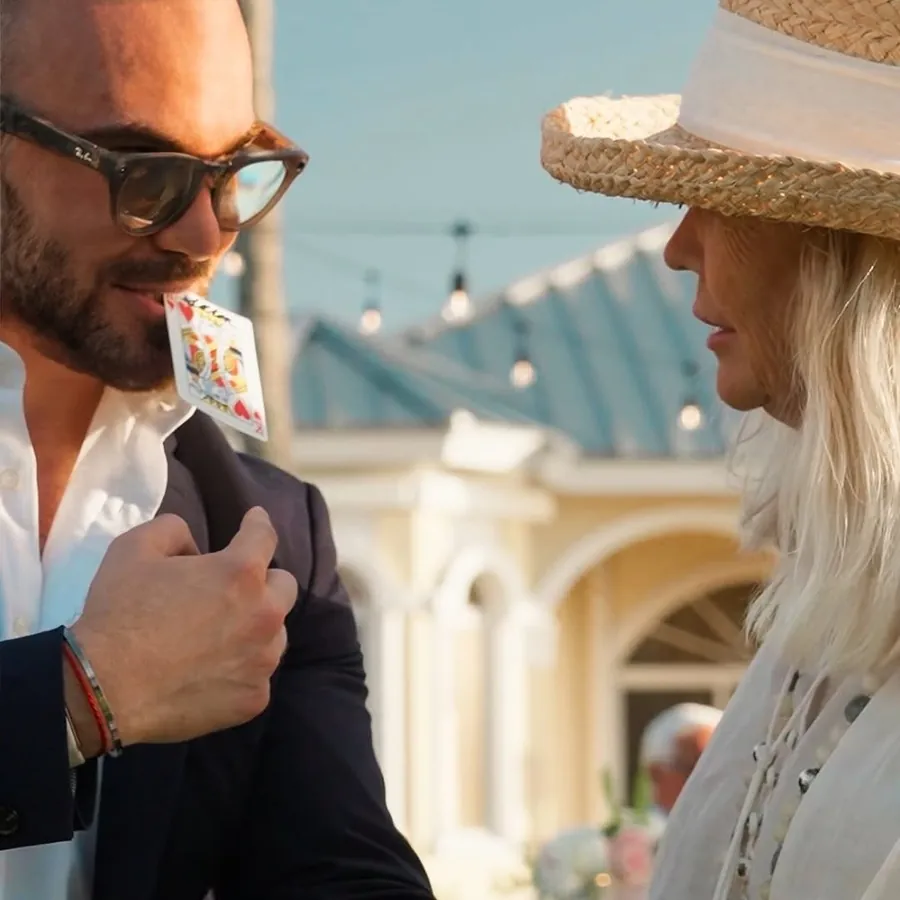
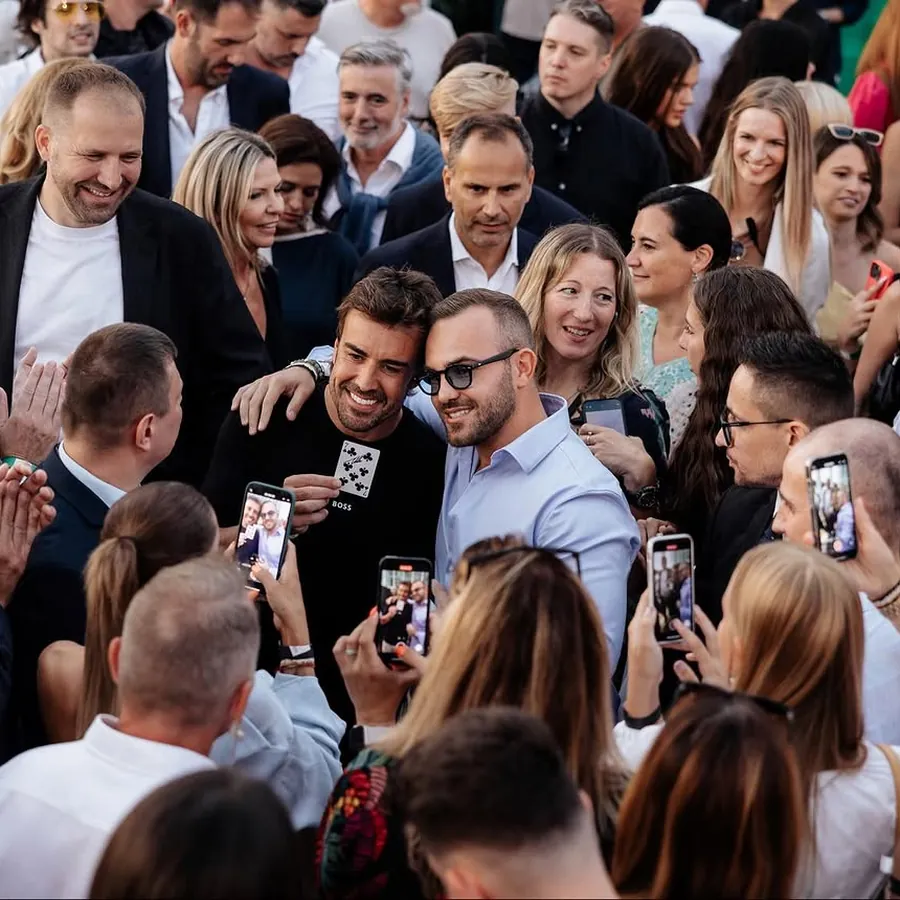
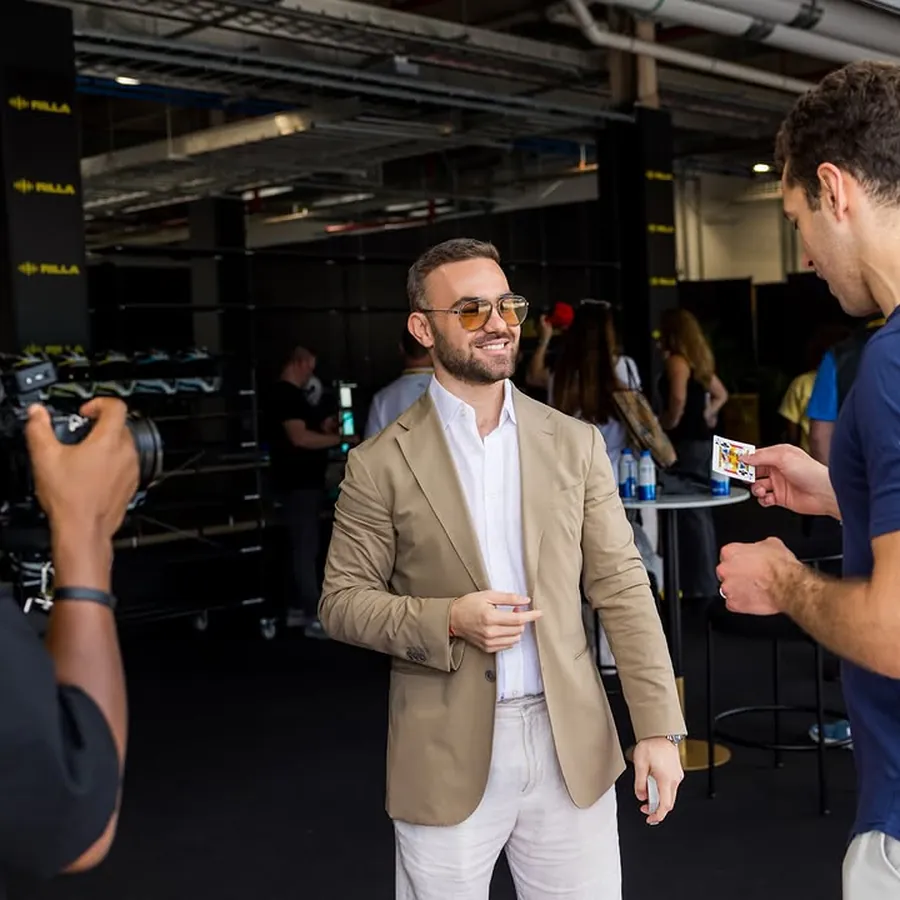
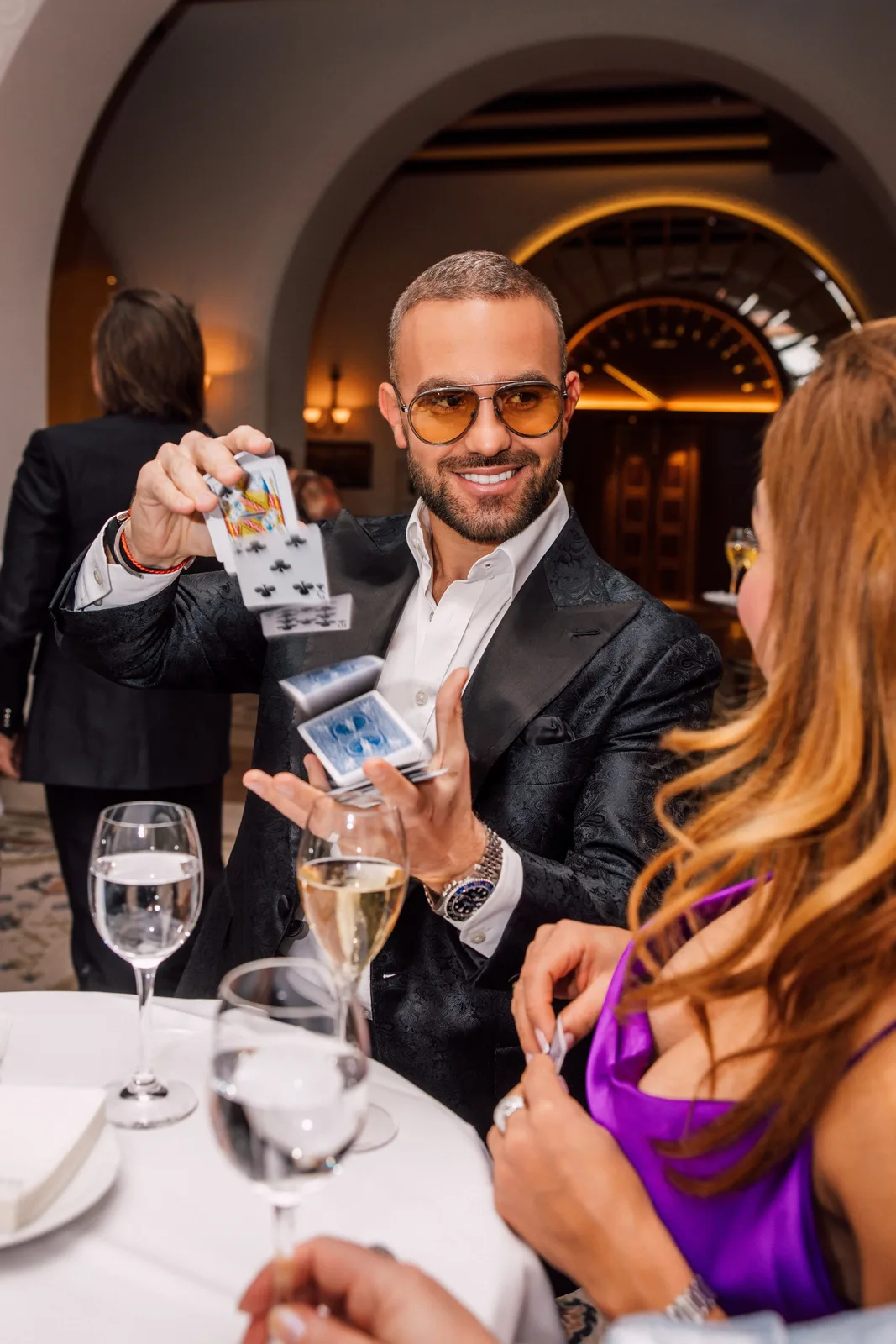
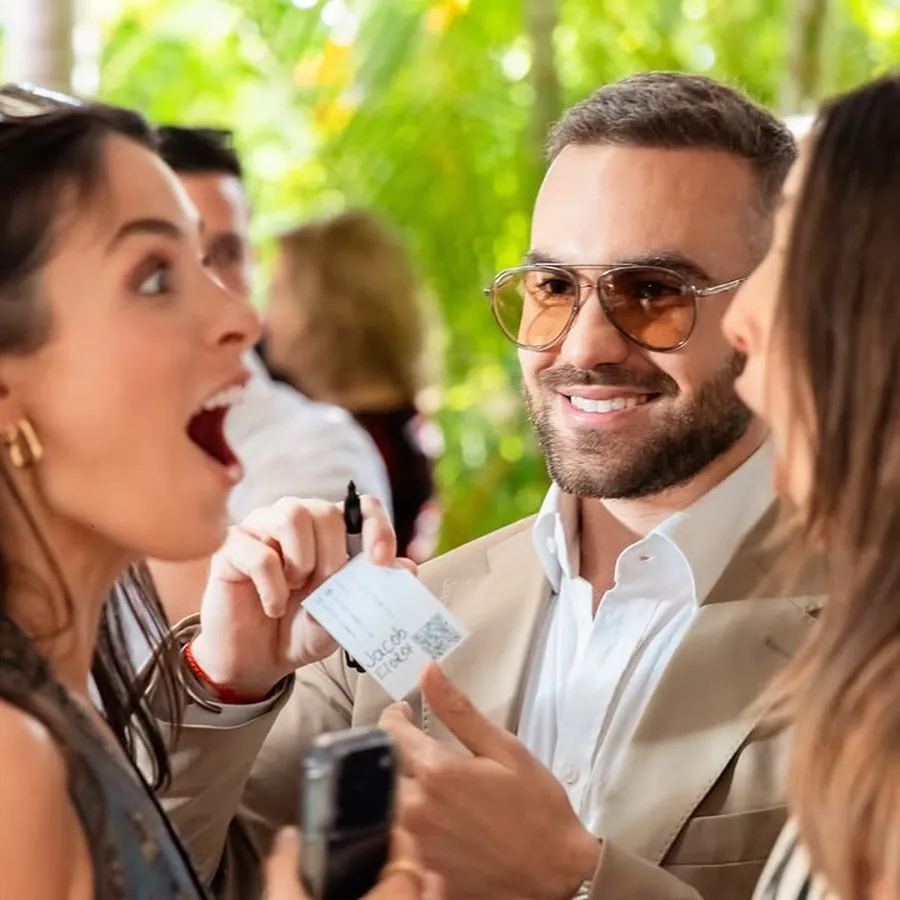
Cocktail hour belongs to close-up, walk-around magic. Matteo moves between standing groups and performs for six or eight guests at a time — no stage, no microphone, no set-up, nothing needed from the venue. Mentalism appears here only in flashes, at conversational distance; its real moment waits for the seated room.
The welcome evening, for destination weddings. The night before, when two families who have never met are in one room for the first time, a mentalist gives strangers something to talk about that is not the weather or the seating plan. It is frequently the stronger booking of the weekend.
What none of this is: a stage act dropped into a wedding. There is no claim of the supernatural — Matteo presents mentalism as what it is, psychology, attention and technique — and no guest is embarrassed or made the joke. At a wedding that is not a reassurance, it is the design constraint everything else is built around.